
PPF · By Brock Timperley
Is Paint Protection Film Worth It? An Honest Look for NZ Car Owners
If you have priced up paint protection film for your car, you have probably had a moment of hesitation. It is not a small spend, and it is fair to ask whether it actually earns its keep, or whether it is just another upsell that sounds good in the showroom.
We get that question a lot at the workshop, and we would rather give you a straight answer than a sales pitch. The truth is that PPF is not the right call for every car or every owner. But for the right vehicle and the right driver, it is one of the few protection products that genuinely pays for itself.
Here is the honest short version. Paint protection film is worth it when the cost of the film is less than the cost of the paint damage you are likely to face, and when keeping your factory paint intact matters to you for resale or peace of mind. For a new car, a high-value car, or a car that sees motorway and gravel-road kilometres, PPF usually stacks up. For an older car you plan to sell soon, or a low-kilometre city car you will not keep long, it often does not.
Below we walk through exactly what you are protecting against, the real numbers behind the decision, and how to tell which side of the line your car sits on.
What You Are Actually Protecting Against on NZ Roads
Before you can decide if PPF is worth it, you need to be clear about what it is defending your paint from. This is not theoretical damage. It is the everyday wear that New Zealand roads hand out.
The biggest threat is stone chips. Sit behind a truck on State Highway 1, or follow a ute through a roadworks zone, and small stones get flicked up at speed. Each one can punch through your clear coat and leave a chip that exposes bare metal to the weather.
Then there is gravel. Canterbury has no shortage of metal back roads, and loose gravel is brutal on a front bumper, bonnet and lower guards. Anyone who drives rural routes out of Christchurch knows the fine spray of grit that comes off a passing car.
Motorway grit and road debris add to it. Sand, salt near the coast, and the general grime thrown up off the tarmac all sandblast the front of your car over time. Modern factory paint does not help here. Manufacturers have moved to thinner, more environmentally friendly water-based paints, and that clear coat is softer and easier to chip than the paint on cars from twenty years ago.
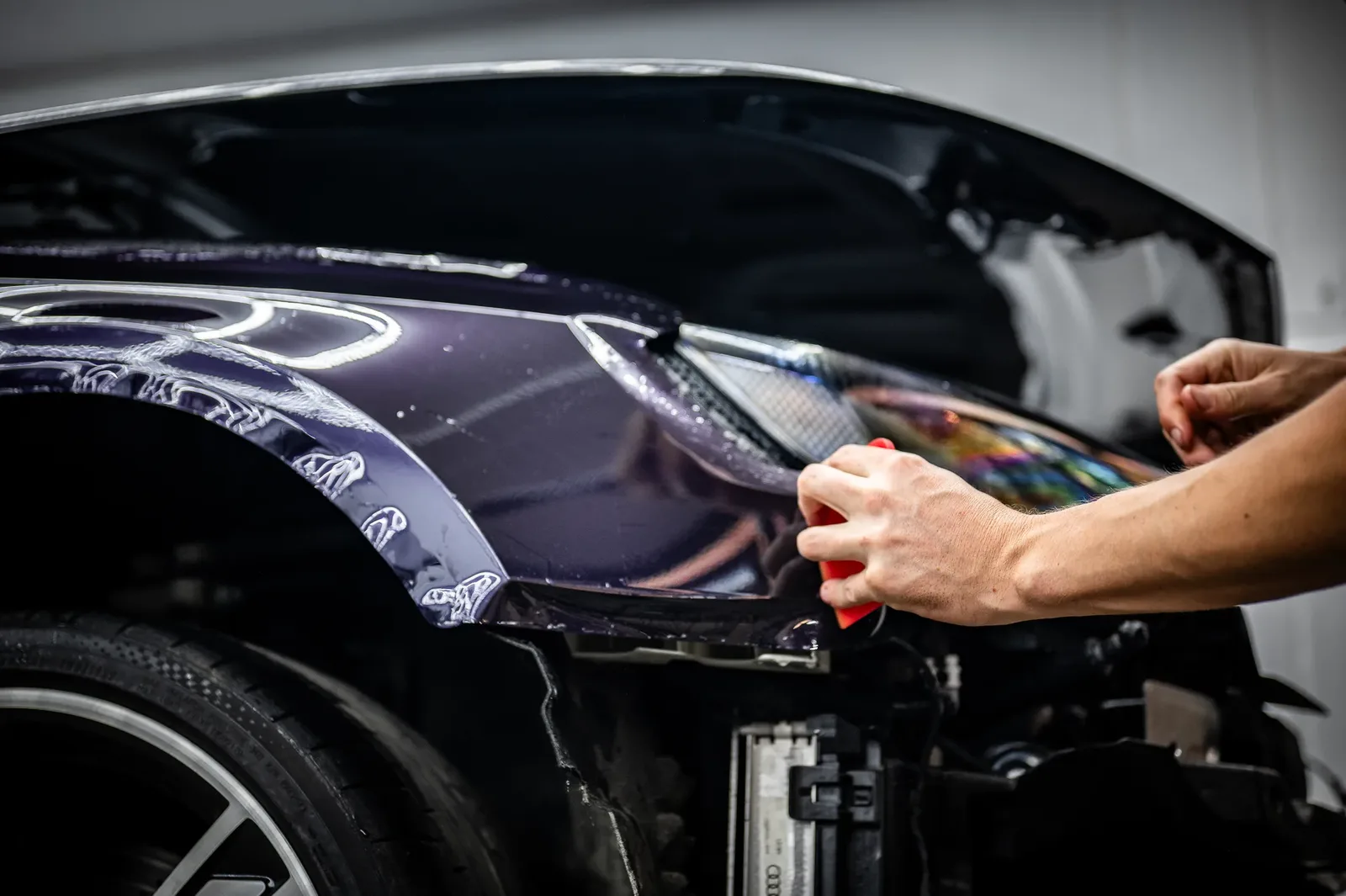
PPF is a clear urethane film that takes these hits instead of your paint. It absorbs and disperses the energy of an impact so the chip never reaches the surface underneath. Quality film also has a self-healing top coat, so light scratches and wash swirls vanish when the film is warmed by the sun. You can read more about how it works on our paint protection film page.
The Real Cost vs the Cost of a Respray or Chip Repair
This is where the worth-it question is really settled. PPF is a significant investment, and we will not pretend otherwise. It is a labour-intensive job where film is precision-cut and hand-fitted to every panel, and packages range from a partial-front coverage right up to full-body protection.
But the cost only makes sense when you weigh it against the alternative, which is fixing paint damage after it happens.
A single stone chip looks minor until you try to repair it properly. Touch-up paint rarely matches well and never fully hides the damage. A proper repair means blending paint on the affected panel, and once you start respraying panels you are into real money. A full bonnet respray is a meaningful bill, and it will never match the factory finish or factory durability.
| Paint protection film | Repairing the damage later | |
|---|---|---|
| When you pay | Once, upfront | Every time damage occurs |
| Factory paint kept original | Yes | No, panel is resprayed |
| Colour and finish match | Perfect, paint is untouched | Hard to match exactly |
| Self-healing of light marks | Yes | No |
| Covered by warranty | Yes, 10 years at Tiger Tint | No |
| Ongoing risk | Protected | Damage can keep happening |
The maths is simple enough. If you expect your car to collect several chips and at least one panel respray over the years you own it, PPF on the high-impact areas often costs less than that repair work, and it keeps your original paint intact rather than replacing it.
For a full breakdown of what protection costs in our region, we have written a separate guide on car protection costs in Christchurch that is worth a read before you commit.
PPF and Resale Value: Preserving Factory Paint
There is a part of the value case that does not show up until you sell the car, and it is one buyers consistently underrate.
Original factory paint is worth real money on the used market. When a buyer or a dealer inspects a car, they look for resprayed panels, chips, and signs of touch-up work. A car with unmarked, original paint inspects better and holds its value better than one that has been patched up.
PPF lets you keep that factory paint perfect underneath the film. When you eventually sell, the panels look as good as the day you bought the car. The film can be removed by a professional if a buyer prefers, leaving the original paint untouched.
For a near-new or high-value vehicle, that preservation can be a genuine factor at resale time. You are not just buying protection for while you own the car. You are protecting the condition you will be selling on. For an older car worth less to begin with, this part of the case weakens, which is exactly why the decision depends on the specific vehicle.
When PPF Is Worth It and When It Is Not
We would rather you spend your money well than spend it with us on something you do not need. So here is the honest breakdown of who PPF suits and who it does not.
PPF is worth it if you have a new or near-new car. Protecting factory paint from day one, before the first chip and before any wash marring, is always easier and cheaper than correcting damage later. New cars also have that softer modern paint that chips readily.
It is worth it if you drive motorway or gravel kilometres. Regular open-road commuting or rural Canterbury driving makes stone chips close to inevitable. Front-end PPF directly addresses the damage you are most likely to get.
It is worth it for a high-value or much-loved car. If the vehicle is expensive to repaint, or you simply care about keeping it immaculate, the film earns its place.
It is worth it if you keep your cars for years. The longer you own a car, the more chips it would otherwise collect, and the more the upfront cost is spread out.
PPF is probably not worth it if you are selling the car soon. If you will move it on within a year, you will not see enough benefit to justify the spend.
It may not be worth it on an older, lower-value car. If the car is already chipped, worth modest money, and you are not precious about it, the cost is hard to justify against the car’s value.
It is less essential if you drive low kilometres in the city and garage the car. Your impact risk is genuinely lower. A good wash routine and a ceramic coating may be all you need. Front PPF is still a sensible option for resale, but it is not a must.
If you are in one of the not-worth-it groups, we will tell you so. An honest no costs us a sale today and earns trust for next time.
Clear vs Coloured PPF: Does It Change the Value Case
One more thing affects how the numbers feel, and that is the type of film you choose.
Clear PPF is the traditional option. It is virtually invisible once installed, so your car looks exactly as it did from the factory, just permanently shielded. The entire value of clear film is protection, plain and simple.
Coloured PPF, sometimes called colour PPF, does two jobs at once. It protects the paint in the same way clear film does, and it changes the look of the car, giving you a new colour or finish without a respray. We install coloured film from brands like Inozetek alongside clear film from STEK, and you can see the options on our colour PPF page.
| Clear PPF | Coloured PPF | |
|---|---|---|
| Stone chip protection | Yes | Yes |
| Self-healing top coat | Yes | Yes |
| Changes the car’s colour | No | Yes |
| Reversible without affecting paint | Yes | Yes |
| Value beyond protection | Protection only | Protection plus a styling change |
For the worth-it question this matters. With clear film you are paying purely for protection. With coloured film you are also paying for a styling change you might otherwise spend money on separately, which can make the combined spend easier to justify if a colour change was already on your mind.
Both options carry the same 10-year warranty with us, and both keep your factory paint safe and original underneath.
The right answer always comes down to your specific car, how you drive, and how long you plan to keep it. Tell us a bit about your vehicle and we will give you a straight recommendation, including telling you if we think PPF is not the best use of your money. Get a free, no-obligation quote here.
Frequently Asked Questions
Is paint protection film worth the money?
For the right car it usually is. If the cost of the film is less than the paint repairs you are likely to face, and you care about keeping factory paint intact, PPF pays its way. For an older car you will sell soon, or a low-kilometre garaged car, the case is weaker and we will say so.
How long does PPF last?
Quality professionally installed film lasts many years. At Tiger Tint our PPF carries a 10-year warranty, and the self-healing top coat keeps it looking fresh by clearing light scratches and swirls when warmed by the sun.
What are the pros and cons of PPF?
The main pro is genuine physical protection against stone chips, gravel rash and light scratches, which preserves your factory paint and resale value. The main con is cost, since it is a precise, labour-intensive installation. Choosing quality film and a skilled installer manages the downside.
Does PPF need to cover the whole car to be worth it?
No. Many owners protect only the high-impact areas, such as the bonnet, front bumper, guards and mirrors, because that is where most stone chips land. Partial-front coverage is a sensible, lower-cost entry point, with full-body protection available if you want it.
Will PPF damage my paint when it is removed?
No, when it is removed by a professional. Quality film is designed to be removable, leaving the original factory paint untouched underneath. That is part of why it is so useful for protecting resale value.
Should I get clear or coloured PPF?
Choose clear film if you want invisible protection that keeps your car looking factory-fresh. Choose coloured PPF if you also want to change the car's colour or finish without a respray. Both protect against chips and carry the same warranty. Talk to our team and we will help you decide.