
PPF · By Brock Timperley
Full Front PPF vs Full Body PPF: How Far Should You Go?
Once you have decided that paint protection film is worth doing, the next question lands straight away. How much of the car do you actually cover?
We get asked this most days at the workshop. The options run from a bonnet and a few high-wear spots all the way to every painted panel on the vehicle, and the price moves a long way between those two ends. It is a fair thing to hesitate over.
Here is the short version. Full front PPF is the right call for most people, because the front of the car takes almost all of the stone chip damage on New Zealand roads. Full body PPF is worth the extra when the car is high value, when you drive gravel or rural routes regularly, or when you plan to keep it for years and want every panel to stay original. If your driving is mostly sealed roads and city kilometres, full front coverage handles the damage you will actually get.
Below we break down exactly what each level covers, what pushes a car from one to the other, and how to work out where your vehicle sits.
What a Full Front PPF Package Actually Covers
Full front is the most common package we fit, and the name is fairly literal. It covers the panels that meet the road first.
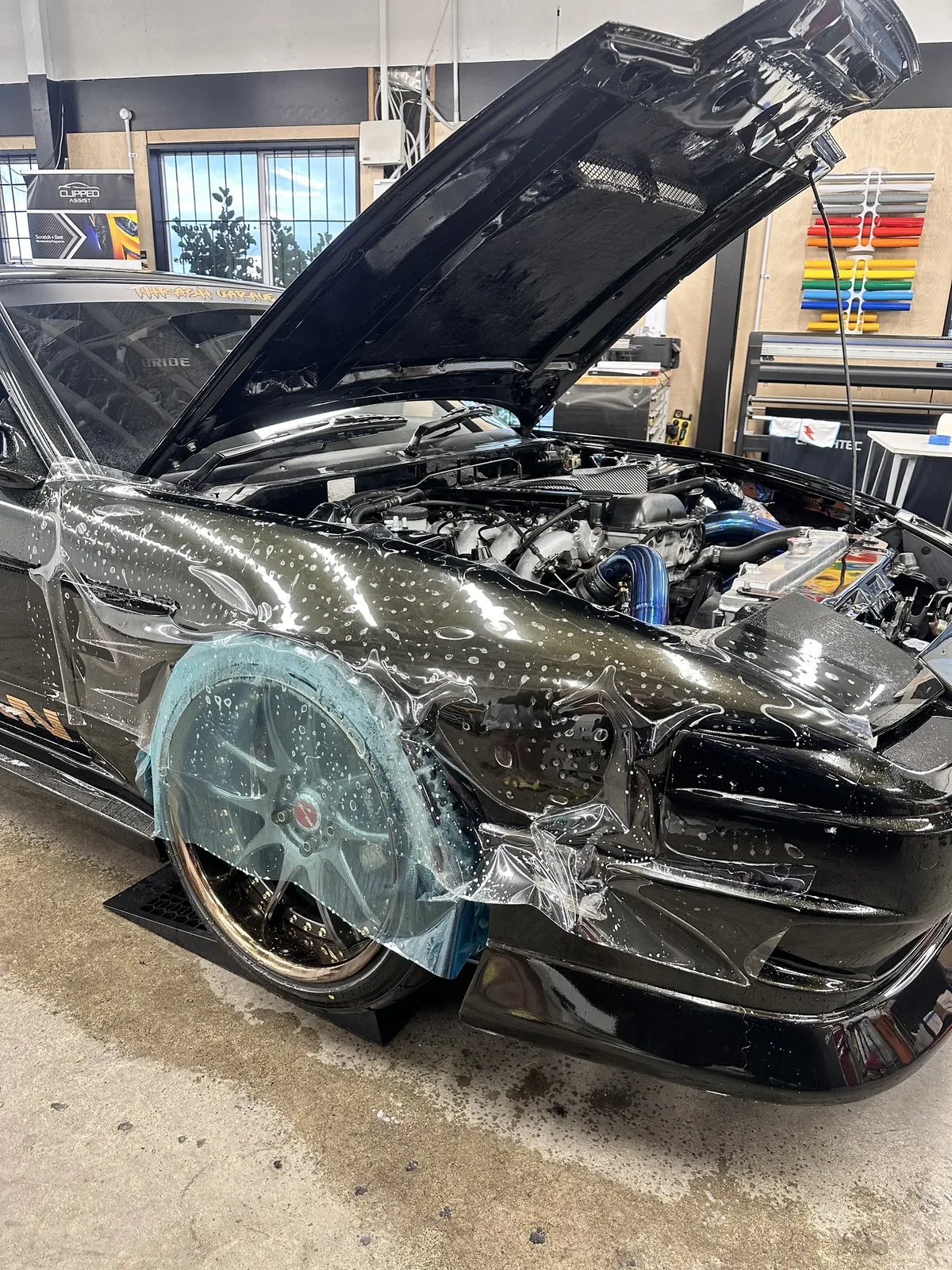
That means the front bumper, the bonnet, the front guards and the wing mirrors. Our larger front packages also take in the headlights and the A-pillars, since those catch grit at motorway speed just as readily as the bonnet does.
The logic is simple. Stones do not fly backwards. When you sit behind a truck on State Highway 1, or follow a ute through a roadworks zone, everything that gets flicked up hits the front of your car. Cover that, and you have dealt with the overwhelming majority of the chip damage your paint will ever face.
There are smaller options below this too. A partial package covering a bonnet protector, door cups, door edges and the top of the rear bumper handles the most common damage points without doing the whole front end. It is a sensible entry point if the budget is tight.
Every one of these packages uses the same self-healing film with the same 10-year warranty. You are choosing how much of the car is protected, not how good the protection is. You can see the full package breakdown on our paint protection film page.
What Full Body PPF Adds on Top
Full body coverage means every painted panel. Bumpers front and rear, mirrors and handles, rocker panels, doors, rear quarters, the roof, the lot.
The panels this adds are not chip magnets in the way a bonnet is, but they collect a different kind of damage. Lower doors and rocker panels get sandblasted by grit thrown up off the road, and that is far worse on gravel. Rear quarters and wheel arches take stone spray off the front tyres. Door edges and handles collect the small scuffs of daily use, car parks and fingernails.
There is also the point that a lot of owners care about most. With full body film, every panel on the car keeps its original factory paint, protected and unmarked, for as long as the film is on it. Nothing is left exposed. When the film eventually comes off, the paint underneath is untouched.
That completeness is the real product. You are not just buying more square metres of film, you are removing the “what about that panel” question entirely.
The Cost Difference and How to Think About It
This is usually where the decision gets made, so here are the actual numbers rather than a vague range.
Our PPF packages start at $499 for essential protection covering the most common damage points, with front-end packages from $899 and our most popular Gold package at $1,999. A fuller front package that takes in the front bumper, the full bonnet, the front guards, the headlights and the A-pillars starts at $2,499. Full vehicle coverage starts at $5,999. Every price depends on the car, because a large SUV with complex bumpers takes far more film and far more hours than a small hatch. The only accurate number is a quote on your actual vehicle.
The way to weigh that gap is against what paint repair costs. A single panel respray costs $400 to $800, and a full bonnet repaint is over $1,000. Preventing the first few chips on the front end often covers a large part of a front-end package on its own.
Run that same maths across the rest of the car and it works differently. The rear quarters and doors on a city-driven car may never need a respray at all, which is why full body coverage is easier to justify on cars that see harsh conditions or hold serious value.
| Full front PPF | Full body PPF | |
|---|---|---|
| Panels covered | Bumper, bonnet, guards, mirrors, headlights, A-pillars | Every painted panel |
| Stone chip protection where it lands | Yes | Yes |
| Lower doors and rocker panels | Not covered | Covered |
| Rear quarters and arches | Not covered | Covered |
| Self-healing top coat | Yes | Yes |
| Warranty | 10 years | 10 years |
| Starting price | Front-end packages from $899, full front coverage from $2,499 | From $5,999 |
How to Decide Which Level Your Car Needs
Here is how we actually talk this through with customers, and we would rather steer you to the right level than the expensive one.
Go full body if you drive gravel or rural roads regularly. Loose metal does not just hit the front. It sprays down the flanks of the car and gets thrown up into the arches and rockers by your own tyres. This is the single strongest case for full coverage, and it is a real one for a lot of Canterbury drivers.
Go full body on a new, high-value car you intend to keep. The more expensive the paint is to repair, and the longer you will own it, the more the full spend spreads out and the more the original-paint argument matters.
Go full front if your driving is mostly sealed roads and commuting. Motorway and town kilometres put the damage on the front end, so that is where the film belongs. This covers most cars we see.
Go full front, or a partial package, on an older car. If the paint already carries some chips and the car is worth modest money, protecting the panels most likely to need repair is the sensible use of your budget. We will tell you if we think that is the case.
Start with the front and add later if the budget is the constraint. Film can be added to more panels down the track. Protecting the front now is far better than waiting until you can afford everything, because the chips you collect while you wait do not undo themselves.
If you are still not sure PPF is the right product for your situation at all, our guide on whether paint protection film is worth it works through that question first. And if you are weighing film against a coating, PPF vs ceramic coating covers what each one genuinely does.
The Honest Answer for Most Cars
If we had to give one recommendation with no other information, it would be full front coverage. It puts the film where the damage is, it costs a fraction of full body, and it deals with the problem that most owners are actually trying to solve.
Full body is not an upsell we push. It is the right answer for a specific set of cars, and when yours is one of them we will say so plainly. When it is not, we will tell you that too.
The best way to settle it is to tell us what you drive, where you drive it, and how long you plan to keep it. We will give you a straight recommendation on the coverage level that suits, and a price on your actual car. Get a free, no-obligation quote here.
Frequently Asked Questions
What does full front PPF cover?
A full front package covers the panels that take the most impact at speed. That is the front bumper, the bonnet, the front guards and the wing mirrors, and our larger front packages add the headlights and A-pillars as well. It is the coverage that deals with stone chips, because stones hit the front of the car first.
Is full body PPF worth the extra cost?
It depends on how you use the car. Full body coverage protects every painted panel including the doors, rocker panels and rear quarters, which matters on gravel roads, in car parks and around door edges. On a high-value car you plan to keep, that is money well spent. On a daily commuter that mostly sees sealed roads, full front coverage handles the damage you are actually likely to get.
Is PPF better than a vinyl wrap for protection?
For protection, yes. PPF is a thicker urethane film that absorbs impacts and has a self-healing top coat, while vinyl is a thinner cosmetic film. If you want protection and a colour change in one go, coloured PPF does both, and it has a smoother, paint-like finish with no orange peel texture. Both clear and coloured PPF carry our 10-year warranty.