
Wrapping · By Brock Timperley
How Much Does It Cost to Wrap a Car in NZ?
If you have started pricing up a car wrap, you have probably found the answer everyone gives is the same: “it depends.” That is true, but it is not very useful when you are trying to budget. So let us give you real numbers and the reasons behind them.
We wrap cars at the workshop every week, from simple roof wraps to full colour changes on utes and Euros. The price swing between those jobs is huge, and it is not because anyone is making it up as they go. There are clear, sensible reasons a quote lands where it does, and once you understand them you can work out roughly where your car will sit before you even call us.
Here is the honest short version. A full vinyl wrap on a standard car in New Zealand typically costs between $3,500 and $6,000. Small partial wraps such as a bonnet or roof start in the low hundreds, while large vehicles, premium colour-shift or satin finishes, and cars that need a lot of trim removed sit at the upper end. The exact figure comes down to the size of your car, the film you pick, and how fiddly the install is.
Below we break down exactly what you are paying for, how full and partial wraps compare, and how a wrap stacks up against a respray.
What You Are Actually Paying For in a Wrap
A wrap quote is not just a roll of vinyl and an afternoon. The film itself is a real cost, but the bigger part of any good wrap is labour and preparation. Understanding that split helps the price make sense.
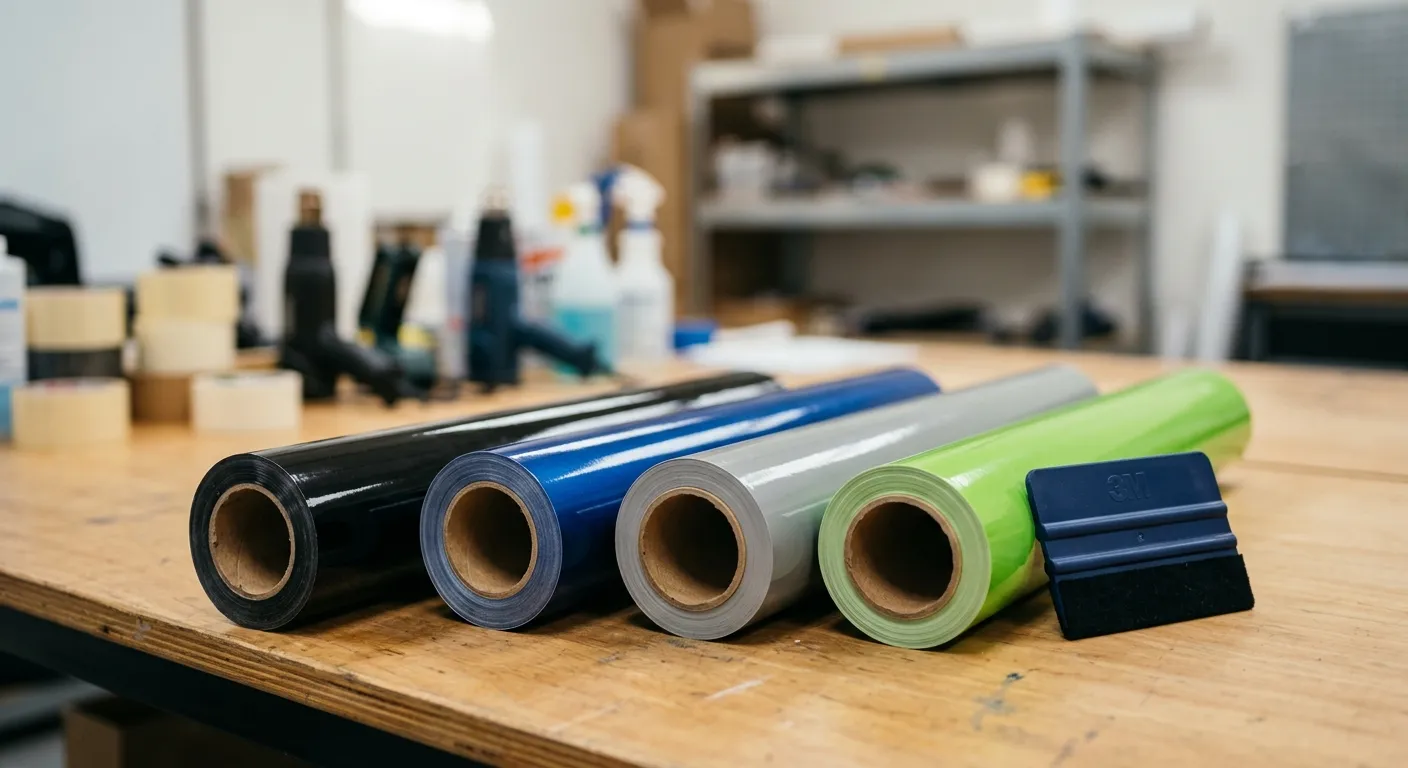
The film is the obvious bit. Quality cast vinyl from brands like 3M, Avery Dennison or KPMF is designed to stretch over curves, resist UV and stay put for years. Cheap calendared film is much less money, but it shrinks, lifts at the edges and fades fast, so it is a false economy on a whole car.
Then there is the prep. Before any film goes on, the car is washed, decontaminated and every panel is cleaned back to a perfect surface. Dirt, wax or polish left under a wrap will cause it to lift, so this step is not optional.
The labour is where the real hours go. A proper wrap means removing or loosening trim, badges, handles, lights and sometimes bumpers so the film can be tucked in behind edges rather than cut at them. That tucking is what makes a wrap look factory instead of like a sticker. Tight panels, deep curves and door jambs all add time, and time is the single biggest driver of your quote.
Full Wrap Pricing: What to Expect
A full wrap changes the entire visible colour of the car. Every outer panel is covered, edges are tucked, and from the outside it looks like the car came that colour from the factory.
For a standard hatch or sedan in a straightforward gloss or satin colour, you are usually looking at the lower-to-middle part of the $3,500 to $6,000 range. The car is a manageable size, the panels are relatively simple, and the film is a single solid colour.
Larger vehicles cost more, simply because there is more car to cover and more panels to work around. A ute, a large SUV or a van uses more film and takes more hours, so these sit higher in the range or above it.
Premium finishes push the price up again. Colour-shift, chrome, brushed-metal and some satin or matte films cost more per metre and are less forgiving to install, so a wrap in one of these finishes costs more than the same car in a standard gloss colour.
The condition and shape of your car matters too. A vehicle with lots of complex curves, body kit, or trim that has to come off carefully will take longer than a clean, simple-shaped car. None of this is padding, it is just the honest reality of doing the job properly.
Partial Wraps: The Lower-Cost Option
You do not have to wrap the whole car to change how it looks. Partial wraps are one of the best-value ways to update a vehicle, and they start in the low hundreds rather than the thousands.
A roof wrap in gloss black is one of the most popular partial jobs. It gives a two-tone look, breaks up a single colour and is quick to install, so it is affordable. Bonnet wraps are similar, and a common choice for hiding stone-chip wear or adding a contrast feature.
A chrome delete is another favourite. Instead of changing the body colour, we wrap the chrome window trim, grille surrounds and badges in gloss or satin black. It modernises an older car dramatically for a fraction of a full wrap.
Mirror caps, accent stripes and small feature panels round out the partial options. These are a smart way to test the idea of a wrap, or to get a custom look without committing to a full colour change. If you are weighing up a colour change for protection rather than just looks, our colour paint protection film is worth a look too, since it changes the colour and adds genuine stone-chip protection.
Wrap vs Respray: Which Is Better Value?
The most common question we get is whether you are better off wrapping a car or just painting it. For most people chasing a colour change, a wrap wins on value, reversibility and protection.
A quality respray on a standard car, done with proper prep and good paint, usually costs more than a quality wrap once labour is factored in. Cheaper sprays exist, but a budget respray with thin prep tends to show its age quickly, and a paint job is permanent.
A wrap, by contrast, is reversible. The film comes off cleanly and leaves the factory paint underneath untouched, which means your car keeps its original colour for resale. That alone is a big tick for anyone on a lease or planning to sell.
A wrap also protects the paint while it is on. The film takes the UV, light scratches and minor stone-chip wear instead of your clear coat, so the paint underneath stays fresh. If protection is your main goal rather than a colour change, it is worth comparing against ceramic coating and paint protection film, which protect without changing the look.
Paint still makes sense in some cases, such as repairing genuine damage or restoring an older car. But if you simply want a new colour or finish, a wrap is usually the smarter spend.
How Long a Wrap Lasts and What Affects It
Cost is only half the value equation. The other half is how long the wrap stays looking good, and in New Zealand that comes down mostly to sun.
A professionally installed wrap in quality cast film typically lasts five to seven years, and often longer with good care. The film is engineered to handle weather, washing and daily driving for that kind of lifespan.
New Zealand’s UV is harsh, so a car that lives outside in full sun all day will fade sooner than one kept in a garage or carport. Horizontal panels like the roof and bonnet cop the most sun and age first.
Care makes a real difference. Hand washing, avoiding harsh chemicals and keeping the car out of constant direct sun all extend the life of a wrap. Treated well, a good wrap easily outlasts the warranty and keeps paying back the cost over years of use.
So What Will Your Car Cost?
The honest answer is that we cannot give you an exact figure without seeing your car, because the size, shape, film choice and amount of trim work all move the number. But you should now have a realistic range in your head before you ask.
For a quick gut-check: a small partial wrap is hundreds, a full wrap on a standard car is generally $3,500 to $6,000, and a large vehicle or premium finish sits above that. If your expectation matches that, you are on the right track.
When you are ready for a real number, tell us your vehicle, the finish you are after and whether you want a full or partial wrap, and we will give you a straight, itemised quote with no surprises. You can see examples of our work on the vehicle wrapping page or in the gallery.
Ready to find out what your car would cost? Get a free, no-obligation quote here.
Frequently Asked Questions
How much does it cost to wrap a car in NZ?
Most full vinyl wraps in New Zealand land between $3,500 and $6,000 for a standard car, depending on the vehicle size, the film you choose, and how much prep and panel removal the job needs. Small partial wraps such as a roof or bonnet start a few hundred dollars, while large SUVs, utes and premium finishes sit at the top of the range. The only accurate number is a quote on your actual car.
Is it cheaper to wrap a car or paint it?
A quality vinyl wrap is usually cheaper than a quality respray, and it is reversible. A good full respray on a standard car often costs more than a wrap once you account for proper prep, paint and labour, and it permanently changes the car. A wrap protects the factory paint underneath and can be removed later, which is part of why it holds resale value better.
How long does a car wrap last in NZ?
A professionally installed wrap in quality film typically lasts five to seven years, sometimes longer if the car is garaged and washed by hand. New Zealand's strong UV is the main thing that ages a wrap, so a car that lives outside in full sun will see colour fade sooner than one kept under cover.
Is car wrapping legal in New Zealand?
Yes, wrapping your car a different colour is legal in New Zealand. If the wrap changes the main colour of the vehicle you are required to update the colour on record with the NZTA, which is a simple process. The wrap itself does not affect your Warrant of Fitness as long as it does not cover lights, plates or windscreen areas that need to stay clear.
Does a vinyl wrap damage your paint?
No, not when it is quality film installed and removed by a professional. A wrap actually shields the paint underneath from UV, light scratches and stone-chip wear. The risk only appears with cheap film left on too long, or a poor removal on paint that was already flaking, which is why factory paint in good condition is the ideal surface for a wrap.
Can you wrap just part of a car?
Yes. Partial wraps are popular and a good way to manage cost. Common partial jobs include the roof, bonnet, mirrors, a contrasting accent, or a chrome delete that turns chrome trim to gloss or satin black. Partial wraps start in the low hundreds and are a sensible way to change the look of a car without the cost of a full colour change.